
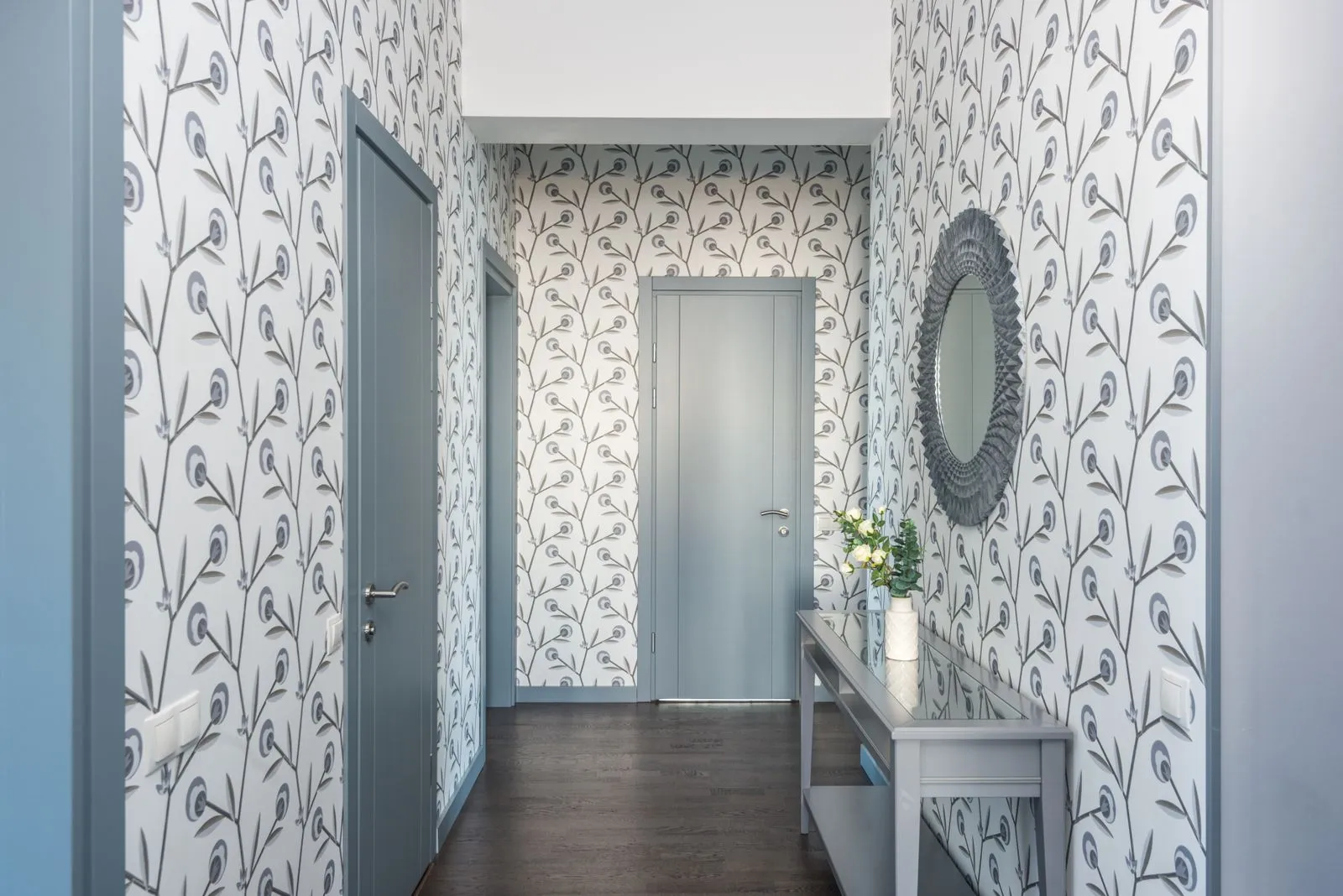
A little preparation makes wallpaper installation smoother and helps your installer focus on a clean, even result. Before the appointment, check the walls, clear working space, and think through details such as outlet covers and pets. You do not need to repair every flaw yourself; some problems require the installer’s assessment. Share what you find ahead of time, especially if the walls have old wallpaper, fresh paint, or visible damage.
Check the Wall Condition
Look over each wall in good light. Note peeling paint, cracks, dents, loose plaster, stains, or areas that feel damp. Wallpaper needs a stable, smooth surface, so mention these concerns before installation rather than covering them up. Water damage or recurring moisture should be addressed at its source first; wallpaper is not a fix for a damp wall.
Tell your installer what is currently on the walls, including existing wallpaper, textured finishes, or recently applied paint. Avoid starting removal or applying primer unless the installer has confirmed what preparation is appropriate. Paint and patching compounds may need time to cure, and the right surface treatment depends on the wall and the wallpaper being installed.
Clear Space Around the Walls
Move furniture away from the walls so the installer can reach the full work area and set up safely. If possible, take smaller pieces out of the room. Cover and relocate anything that must stay, and remove fragile items, artwork, lamps, and decorations from shelves. Keep a clear path from the entrance to the room for tools and wallpaper materials.
Take down curtains, drapes, and wall-mounted items if you can do so safely. Remove outlet and switch plates only if your installer has asked you to; leave electrical components in place. Keep children and pets away from the work area, and arrange for them to be elsewhere if the room will be difficult to keep clear.
Confirm Room Details
Make sure the room has working light and access to power if needed. Keep the temperature and ventilation comfortable, and follow any instructions your installer gives about heating, cooling, or airflow. If the room has an unusual layout, built-ins, high ceilings, or tricky corners, point these out when scheduling or during the pre-installation check.
Confirm which walls will receive wallpaper and identify the starting point or any areas that need special attention. Have the wallpaper and installation instructions available if you purchased the material. Check that the quantity and pattern match the agreed plan, and let the installer know about any damaged rolls or concerns before work begins.
Leave Final Prep to the Installer
Installers may need to measure, inspect seams, smooth the surface, or apply an appropriate primer before hanging wallpaper. Give them room to assess the walls before making last-minute changes. If you are unsure whether to fill a hole, remove old wallpaper, or sand a rough patch, ask first so your work does not create extra preparation.
Before the appointment, send a few clear photos of the walls and describe any repairs or coatings you know about. This helps the installer plan tools and materials and flag possible delays. On the day, walk through the room together, review the scope, and point out anything that has changed since the original estimate.
Preparing the room mostly means making the walls accessible, sharing what you know about their condition, and leaving technical surface work to your installer. A clear workspace and an honest walkthrough help prevent surprises and keep the project on track. For guidance on your specific walls, contact Pine & Pattern before installation.